
Buckingham County, Virginia Land Value Study
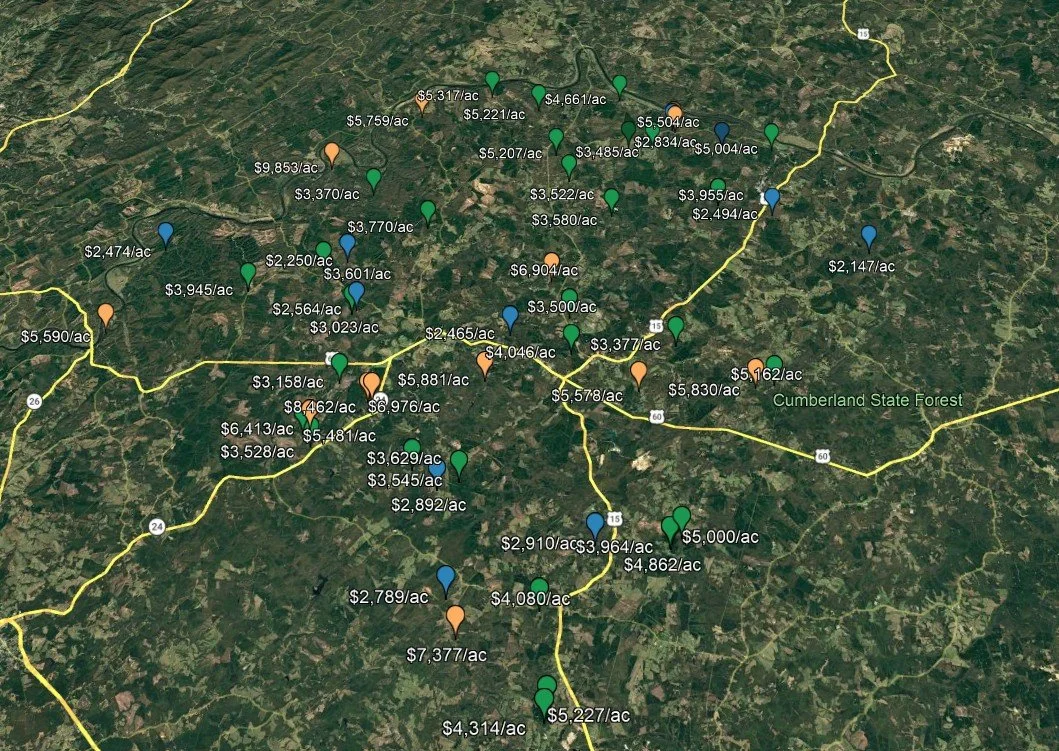
Verified sales over 20 acres compiled from county records and independent market research. Data reflects transactions recorded from August 2025 through July 2026.
Overview
Pinnacle Valuation Group maintains a database of verified rural land sales throughout Central Virginia to support appraisal assignments involving farms, timberland, recreational properties, estate tracts, and other rural real estate. Rural land values in Buckingham County have remained firm over the past year, supported by continued demand for recreational properties, timber tracts, rural homesteads, and investment land. As part of ongoing appraisal assignments throughout Central Virginia, Pinnacle Valuation Group maintains a database of verified land sales to better understand local market trends and buyer behavior.
This study summarizes a review of 57 recorded transactions, including 47 sales that appear to represent primarily vacant land purchases. The data was collected from Buckingham County land transfers and analyzed to identify trends in acreage, sale prices, access characteristics, and overall market performance.
Key Market Findings
The analysis indicates a median vacant land value of approximately $3,964 per acre, with most vacant rural land sales falling between $3,000 and $5,500 per acre. While individual property characteristics can have a significant impact on value, this range generally reflects the current market for many rural recreational, timber, and agricultural tracts within the county.
The median tract size among the vacant land sales reviewed was approximately 49 acres, while the median sale price was $209,000. Demand remains strongest for properties that offer legal road frontage, recreational appeal, timber potential, hunting opportunities, and buildable homesites.
The Importance of Access
One of the clearest trends observed in the data is the influence of access on value. Properties with direct road frontage consistently commanded higher prices than similar tracts accessed by easement or right-of-way.
Road frontage provides easier access for residential use, timber harvesting, farming activities, and future marketability. Conversely, right-of-way tracts typically appeal to a smaller pool of buyers and often sell at a discount. For landowners, lenders, attorneys, and investors, access remains one of the most important factors affecting rural land value.
Tract Size Trends
The data also suggests that smaller tracts generally achieve higher per-acre prices than large acreage holdings. This pattern is common throughout Virginia's rural land market. Smaller tracts are more affordable to a broader range of buyers and frequently attract recreational users, future homesite purchasers, and weekend landowners.
Larger tracts continue to be sought after for timber investment, hunting, recreation, and long-term land holding, although these properties often sell at lower per-acre prices due to their overall purchase price and more limited buyer pool.
Factors Influencing Value
While acreage is important, buyers evaluate many other characteristics when purchasing rural land. Factors that frequently influence value in Buckingham County include:
Road frontage versus right-of-way access
Timber quality and merchantable timber volume
River or stream frontage
Open land suitable for farming
Topography and usability
Availability of homesites
Proximity to major roads and services
Hunting and recreational appeal
No two tracts are identical, and significant variations can occur even among neighboring properties.
Market Commentary
Based on recent transaction activity, Buckingham County continues to experience healthy demand for rural land. Recreational buyers, investors, farmers, and individuals seeking homesites remain active participants in the market. Properties offering strong access, attractive natural features, and development potential generally continue to command premium pricing.
About This Study
This market summary is intended for general informational purposes only and should not be considered an appraisal of any specific property. Land values can vary substantially depending on location, access, improvements, timber quality, zoning, physical characteristics, and market conditions at the time of sale.
If you require an opinion of value for a specific property, please contact Pinnacle Valuation Group for a professional appraisal consultation.
For information regarding custom data products, county land market reports, or GIS mapping services, contact Pinnacle Valuation Group.